
Build a Stable Foundation for New Construction
House Pads in Ridgeland for new home sites requiring level, compacted bases with proper elevation and drainage before builders arrive
Ridgeland Land Management builds house pads for residential construction projects where the natural grade does not support a stable, level foundation. You may be preparing a sloped rural lot for a new home, raising a build site above the flood zone, or creating a flat work area on uneven ground. A properly constructed house pad gives builders a reliable starting point and prevents settling, drainage problems, and structural issues down the line.
This service involves cutting into higher ground, filling low spots, and shaping the soil to create a flat or gently sloped pad at the required elevation. The process includes compacting the fill material in lifts to ensure stability and adjusting the slope to direct water away from the future foundation. House pads often require coordination with site prep work, including clearing, rough grading, and access road installation.
Reach out to discuss your build timeline and the elevation and drainage requirements your builder or engineer has specified.
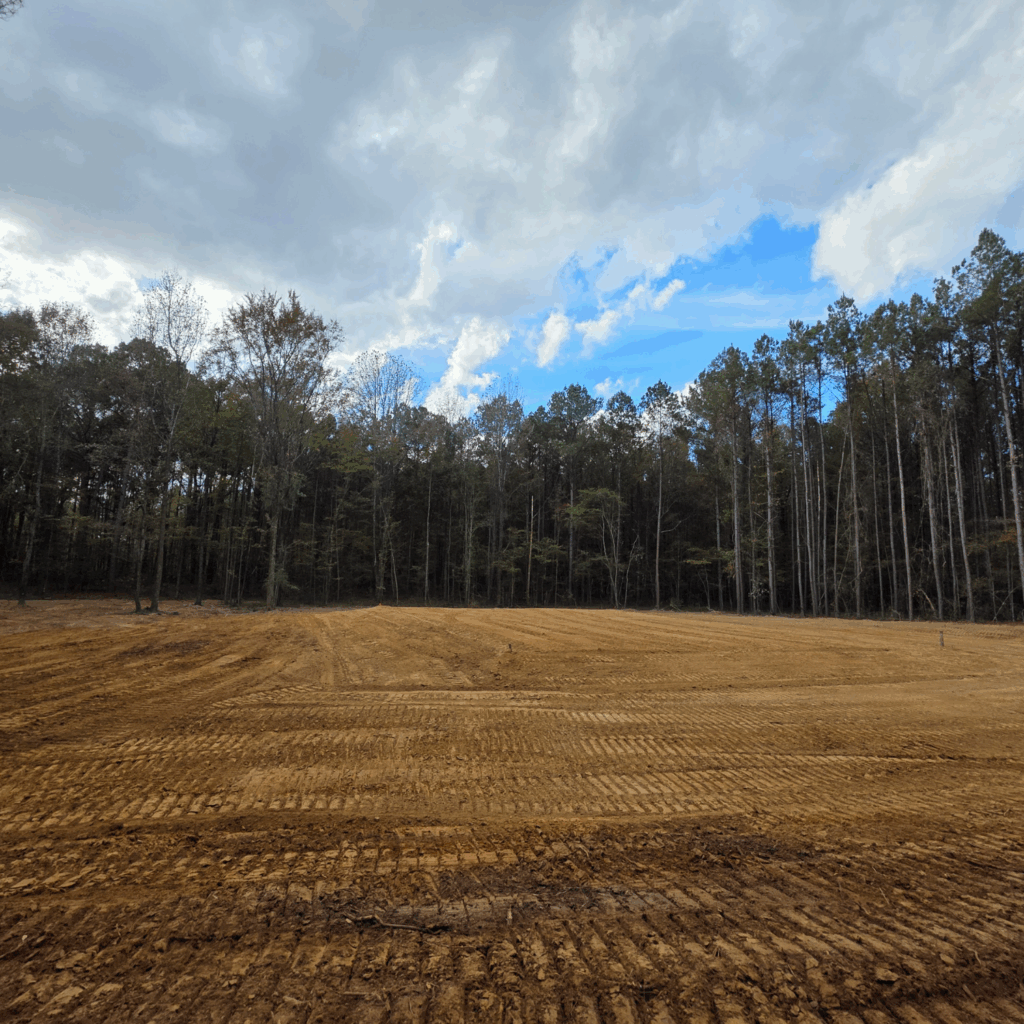
How House Pads Are Constructed for Long-Term Performance
You begin with a survey or site plan that identifies the finished elevation and footprint of the pad. Ridgeland Land Management removes topsoil from the pad area and sets it aside for later use. Fill material, typically clay or select soil, is brought in and spread in layers no thicker than eight to twelve inches. Each layer is compacted with a roller or plate compactor before the next is added, which prevents future settling under the weight of the structure.
After compaction is complete, you will notice a firm, level surface that does not shift underfoot and sheds water toward the edges. The pad sits at the correct elevation for your foundation type and meets the slope requirements needed to keep water moving away from the building. Builders can proceed with confidence that the ground will not settle or erode during construction.
This service does not include pouring concrete, installing utilities, or final finish grading around the home. It also does not cover septic or well placement, which are handled separately. House pad work focuses on creating a stable, properly drained platform ready for the foundation contractor.
What You Should Know Before Starting a House Pad
Most questions involve timing, material requirements, and how the pad integrates with the rest of the site work.
What determines the size of a house pad?
The pad should extend several feet beyond the foundation footprint on all sides to give builders room to work and to support proper drainage grading. Your builder or engineer will specify the dimensions based on the house plans and local building codes.
How much fill material is typically needed?
The amount depends on the existing slope and the target elevation. A home being raised three feet on a sloped lot may require dozens of truckloads of fill, while a site with minor grade correction might need only a few. Soil testing and a site survey help determine the volume.
When should the house pad be built in the construction sequence?
The pad should be finished before the foundation contractor arrives and after clearing and rough grading are done. In areas like Ridgeland and Madison County where clay soils are common, allowing time for the pad to settle and dry after compaction improves stability.
Why is compaction so important?
Uncompacted fill will settle over time, causing cracks in the foundation and uneven floors. Proper compaction ensures the soil reaches maximum density and will not shift under load.
How does drainage get built into the pad?
The pad is sloped slightly, usually around two percent, to move surface water away from the foundation. Swales or drainage ditches may be added around the perimeter to channel runoff toward storm drains or retention areas.
Contact Ridgeland Land Management at (769) 232-2371 to review your site plan and coordinate house pad construction with your builder's schedule.