
Move Earth to Match Your Project Plan
Excavation in Ridgeland for digging foundations, drainage systems, and graded land features
Ridgeland Land Management handles excavation work that involves digging, earthmoving, and shaping land to support foundations, drainage, and other structural needs. You need a trench for utilities, a hole for a foundation footer, or a swale to redirect water away from a building. This service brings the equipment and operator skill required to dig to accurate depths, move soil where it's needed, and prepare the ground for what comes next in your project timeline.
The crew operates excavators and backhoes sized for the scope of the job, from residential foundation work to larger drainage installations. In central Mississippi, soil can shift between clay, sand, and mixed layers depending on where you dig, and that affects how the hole is cut, how stable the walls remain, and whether shoring or dewatering is necessary. Excavation is planned around those conditions and coordinated with other site work like grading or utility placement.
If you're ready to move forward with digging or earthwork, reach out to discuss the project scope and set up a consultation to plan depth, access, and timing.
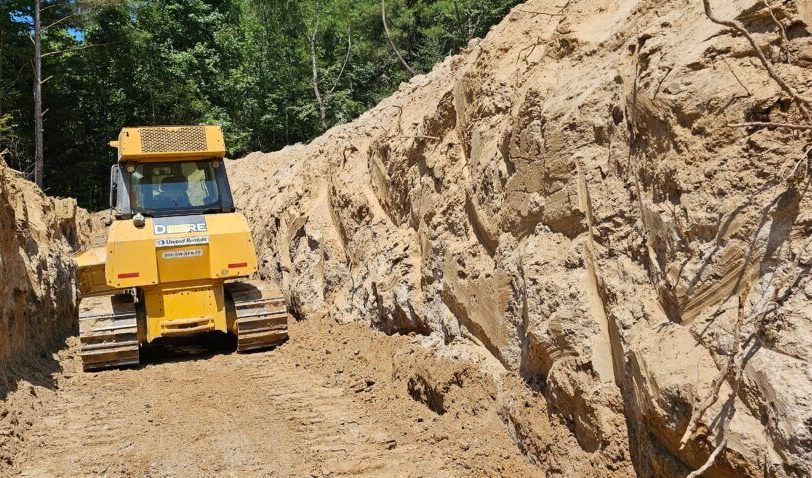
How Excavation Supports the Larger Build
After excavation is complete, you'll see clean cuts at the depths specified in your plans, with soil either spread on-site or hauled away depending on what's needed. Trenches are level and ready for pipe or conduit. Foundation holes are square and deep enough to meet code. Drainage paths are shaped to move water predictably without erosion or pooling.
Ridgeland Land Management works alongside site prep and house pad projects, handling the digging portion while ensuring that grading, compaction, and drainage all fit together. The excavation doesn't just create a hole—it sets elevations that affect how the rest of the structure performs. If the footer is too shallow or the trench slopes the wrong direction, it creates problems that show up later in the form of settling, flooding, or code failures.
This service does not include pouring concrete, laying pipe, or backfilling with gravel unless arranged in advance. It focuses on the digging and earth shaping required to prepare the site. If your project includes multiple phases, excavation typically happens after clearing and rough grading but before utilities or foundations are installed.
What You Should Know About Excavation Work
These questions cover the practical details that come up when planning excavation for residential or light commercial projects in Ridgeland.
What determines how deep excavation needs to go?
Depth is based on your project plans, building codes, frost lines, and the type of structure or system being installed below grade.
How do you handle water that seeps into the excavation?
Depending on the water table and soil conditions, the crew may pump out standing water or schedule the dig during drier months to avoid delays and instability.
When should excavation be scheduled in the construction process?
Excavation should happen after site clearing and rough grading are complete, and before any foundation or utility installation begins.
Why does soil type affect excavation cost and timing?
Clay holds shape but is heavy to move, sand collapses easily and may need sloping or shoring, and mixed soils require adjustments in equipment and technique.
What equipment does Ridgeland Land Management use for excavation?
The crew uses tracked excavators for larger digs and backhoes for tighter spaces, chosen based on depth requirements, access, and soil conditions at your site.
If your project requires precise digging and earth shaping, Ridgeland Land Management can handle the excavation and coordinate with the rest of your site work to keep the timeline on track.