Clear Overgrowth and Restore Property Access
Brush Cutting in Ridgeland for properties overtaken by thick vegetation, saplings, and undergrowth blocking access or usable space
Ridgeland Land Management provides brush cutting services for rural properties, undeveloped lots, and maintained acreage where thick brush and small vegetation have grown beyond control. You may be trying to reclaim a field that has not been touched in years, open up property lines that have become invisible, or maintain access paths that are being swallowed by undergrowth. Brush cutting removes the dense, low-level growth that hand tools struggle with and that mowing equipment cannot handle.
This service uses a rotary brush cutter mounted to a tractor or skid steer to shred saplings, vines, brambles, and woody stems up to several inches in diameter. The machine moves across the property in passes, mulching the vegetation down to ground level and leaving a cleared surface behind. It works well for initial clearing before development, routine maintenance to prevent regrowth, and restoring visibility along fence lines and access roads.
Contact us to schedule a site visit and review which areas need clearing and how often you want the service repeated.
What Brush Cutting Does for Property Maintenance
You start by identifying the boundaries of the area to be cleared. The brush cutter is set to an appropriate height depending on whether you want a close cut or prefer to leave some ground cover. The equipment moves systematically across the site, chewing through growth that would otherwise require a chainsaw, loppers, and hours of manual labor.
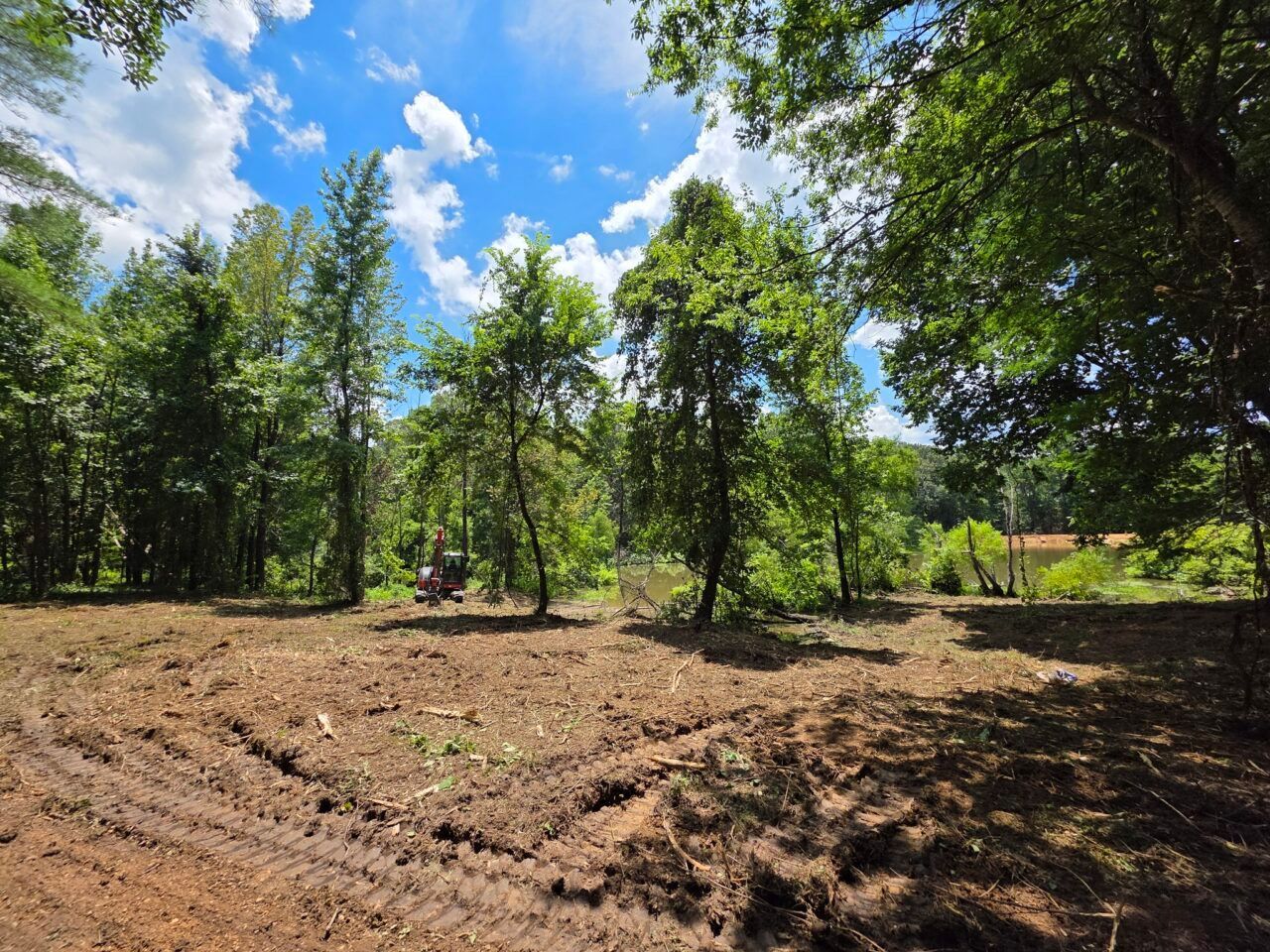
After the brush cutting is finished, you will see open ground where tangled vegetation once blocked movement and sight lines. Ridgeland Land Management completes this work as a standalone service or as part of a larger land clearing effort. The cleared area becomes usable again, whether for livestock, walking paths, future building sites, or simply to prevent fire hazards and pest habitat.
This service does not remove stumps, roots, or debris piles left after cutting. It also does not grade the land or prepare it for construction. Brush cutting focuses on removing above-ground vegetation quickly and efficiently, leaving the cleared material mulched in place unless removal is arranged separately.
Common Questions About Brush Cutting Services
Clients usually want to know how often to schedule the service, what equipment handles the work, and how it differs from mowing or forestry mulching.
What size vegetation can brush cutting handle?
Most rotary brush cutters manage stems and saplings up to three or four inches in diameter. Anything larger may require forestry mulching equipment or selective hand cutting with a chainsaw before the brush cutter goes through.
How often should you brush cut to keep land clear?
If you are maintaining an open field or property line, annual or biannual cutting usually prevents regrowth from becoming unmanageable. Properties left untouched for several years often need a heavier initial pass followed by regular maintenance.
When is the best time to schedule brush cutting in Ridgeland?
Late winter or early spring works well because growth is dormant and visibility is better. Cutting before the growing season also slows regrowth. Avoid scheduling during wet periods when equipment can rut soft ground.
Why not just mow the area instead?
Standard mowers cannot handle woody growth, thick vines, or uneven terrain common on rural or neglected lots. Brush cutters are built to shred tougher material and operate on slopes and rough ground where mowers would stall or break.
What happens to the cut material?
The brush cutter mulches vegetation into small pieces that decompose in place. If you need the material removed or piled for burning, that requires additional handling and should be discussed during planning.
Call (769) 232-2371 to arrange a one-time clearing or set up a maintenance schedule that keeps your property accessible and ready for use year-round.